
Prompt and hope is not real estate marketing
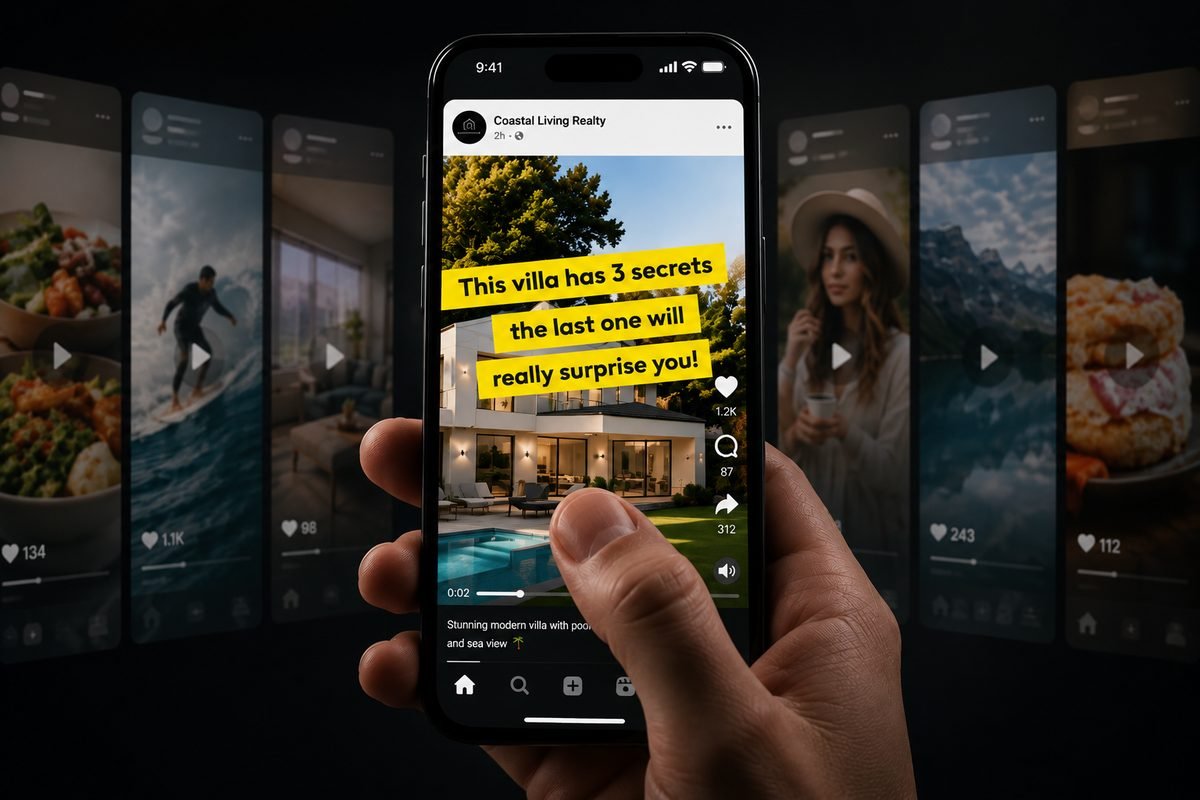
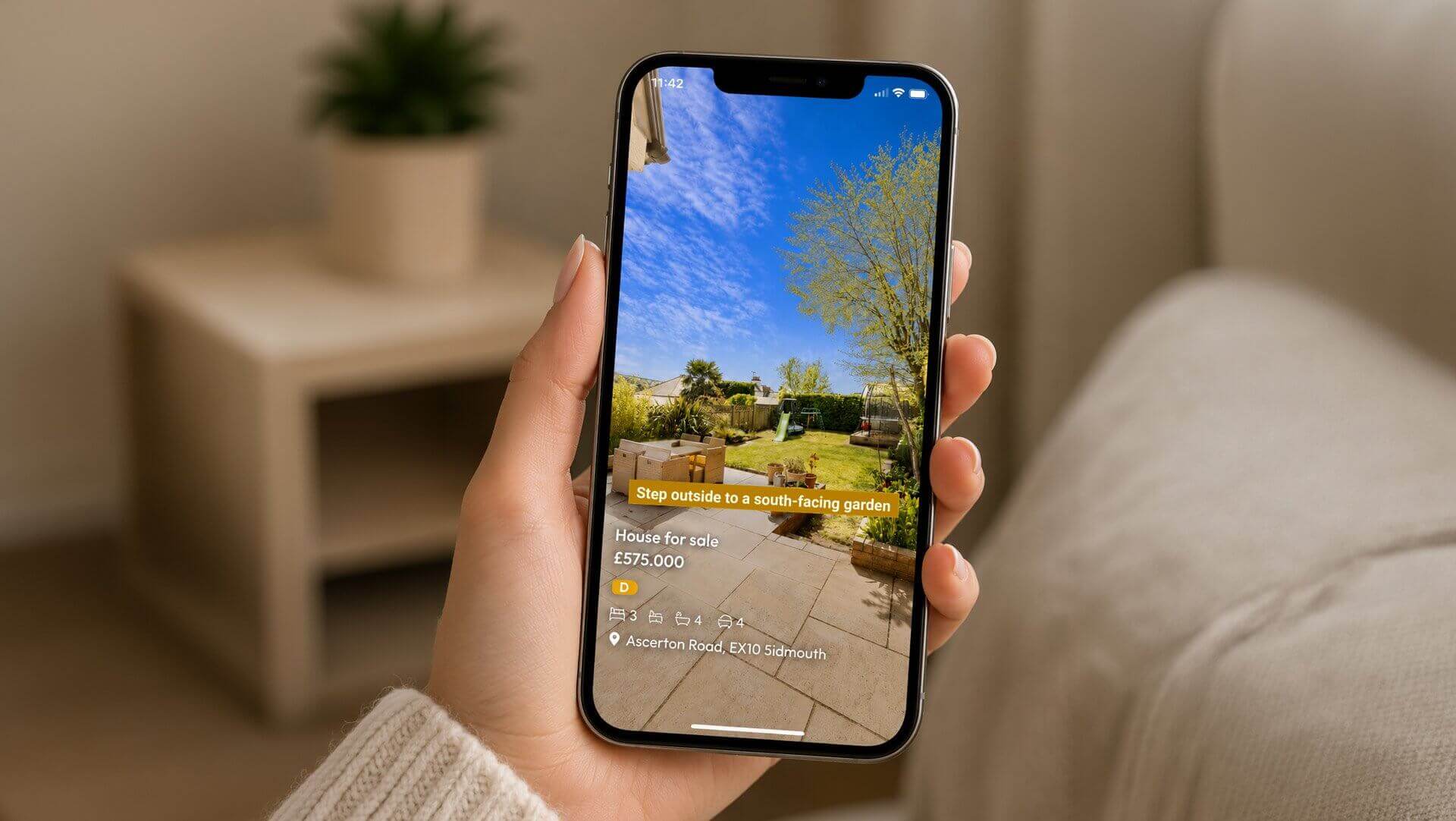
On Instagram and TikTok you see the ads every day: upload a few images, type a prompt, and there you go, a video. The reality is less magical. For anyone who has to land a sale or rental with it, that is not a tool but a casino.
At a glance: the comparison
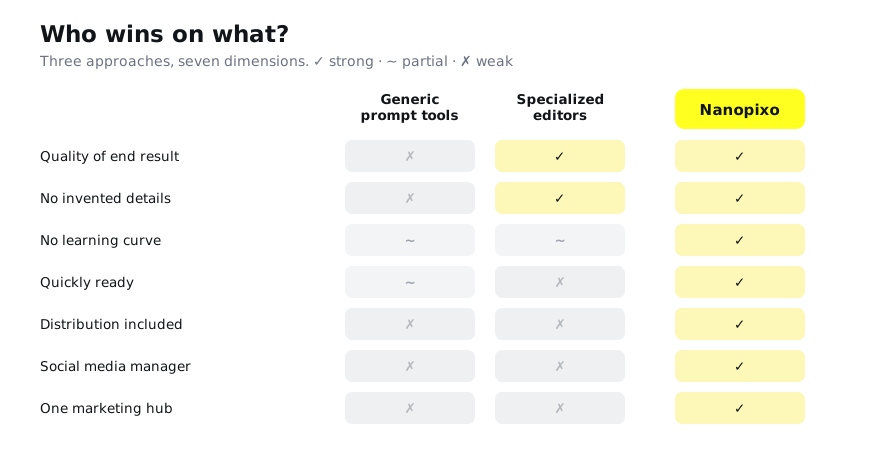
For those who want to compare quickly: here are the three approaches side by side on the dimensions that matter to an agent.
| Dimension | Generic prompt tools | Specialized editors (AutoReel, Amplifiles, Nodalview) | Nanopixo |
|---|---|---|---|
| Workflow | Text prompt, AI invents imagery | Photo, AI video with many settings | Photo/listing URL, finished video |
| Quality of end result | Inconsistent (gamble per render) | Excellent | Excellent |
| Invents details / hallucination | Yes, real risk | No, your own photos | No, your own photos |
| Learning curve / editor role | Prompt roulette | Yes, parameters and editing | No, you just approve |
| Production speed | Variable | Slow, scene by scene | Ready in minutes |
| Distribution | None | Export, upload yourself | Auto-publish + schedule to 6 channels |
| Social media manager | No | No | Yes, built in |
| Central management | No | No | Yes, one marketing hub |
Summary: the specialized tools deliver top quality; Nanopixo matches it and wins on speed, no editor role and the built-in social media manager.
The casino of generic prompt tools
A generic AI video generator turns a text prompt and some images into a video, often with scenes the model makes up itself. Sounds great, but the technology has structural limitations you cannot click away.
Not every tool runs on the latest models. The early generation of generative video struggled with temporal inconsistency: textures that shimmer, shapes that shift and identities that drift from frame to frame, a phenomenon research firm iMerit calls 'temporal drift' and that even got its own academic benchmarks. The latest models have largely solved this, and the leading tools use them too. But by no means every tool you see scroll past on Instagram runs on the latest models, some still deliver that flickering, unstable output. You don't know in advance what you will get.
The persistent problem: the camera moves toward what was not there. The real, lasting risk lies in the camera movement itself. When the camera pans, zooms in or moves through a space, the model has to show imagery that was not in the original photo at all, so it fills in those zones. It invents a stretch of wall, a window, a passage or furniture that does not actually exist. That is hallucination in the most literal sense: the model does not understand the property and generates plausible-looking filler the moment the image runs out (why AI videos look fake). In real estate that is fatal: you are then showing a home that does not exist.
And then there is the script. A generic tool writes a generic script, not text tailored to the location, light, layout and target audience to sell or rent. You get ambiance, not a pitch.
Summary: generic prompt tools deliver a gamble per render, weaker tools are unstable, and the moment the camera moves they invent imagery that does not exist, with a commercially unfocused script on top.
Why this hurts extra in real estate
In most sectors an invented detail is annoying. In real estate it is a liability risk.
When AI adds a window that does not exist, makes a room larger than it is or polishes up a lawn that is actually mud, you raise expectations you cannot meet.
That is not hypothetical. Leading media report on a wave of AI slop in listings: misleading, too-good-to-be-true imagery that frustrates buyers (Cybernews, 2025). The U.S. realtor federation explicitly warns that AI-edited listing photos can be legally risky: professional ethics prohibit exaggerating, misrepresenting or concealing relevant facts, and advertising law requires honest, non-misleading ads. In Europe comparable principles apply.
Adoption makes it urgent: according to the NAR Technology Survey 2025, roughly half of agents already use AI content. Anyone leaning on a generative gamble tool for that quietly increases their risk.
Summary: in real estate an AI hallucination turns from a cosmetic flaw into a legal and reputational risk, honesty is not an option but a duty.
The other extreme: editors that put you back to work
The logical reaction is: then choose a specialized real estate video tool. Rightly so, tools such as AutoReel, Amplifiles and Nodalview are built for the sector and deliver better, more stable results than a generic generator (they animate your own photos instead of inventing scenes).
But there the opposite problem appears: parameter overload. These tools push their power onto you. AutoReel built a full-fledged Studio editor on top of it, with individual camera movements, VFX layers, avatars, voice-over settings and clip-by-clip redo. Amplifiles has a Creative Mode with speed ramps and frame-level editing. Nodalview is at its core an editor/template builder. Powerful one and all, and work one and all.
The result: the agent, or even an office's marketing lead, is pushed back into an editor role, scene by scene, setting by setting. Precisely the role no one wants and no one has time for.
Summary: specialized editors solve the quality but reintroduce the burden, they turn the agent back into a video editor.
The sweet spot: specialized and hassle-free
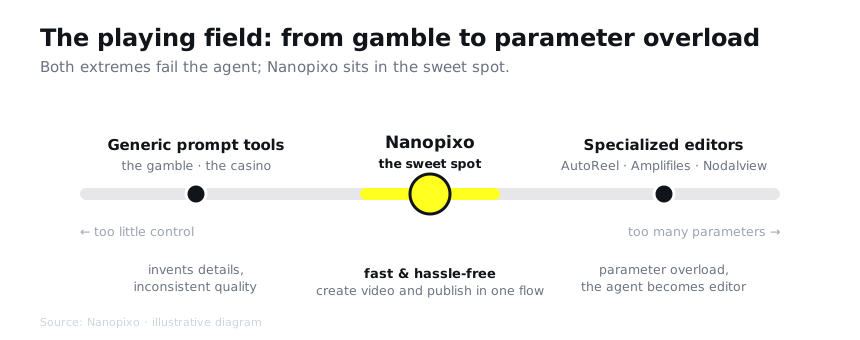
Nanopixo is deliberately built in the space between those two extremes: the same strong quality as a specialized tool, but without the editor role or learning curve, in a fraction of the time, and with a complete social media manager attached.
- Top quality, true to your property. Nanopixo brings your listing to life cinematically with camera movement and image enhancement, without inventing fictional elements or distorting reality. The same strong quality as the best specialized tools.
- Ready in minutes, no learning curve. No timeline, no parameters to learn: you paste your listing, approve and it is online. You are never pushed into an editor role.
- A sales-focused script, tailored to the property, not a generic ambiance text.
- A complete social media manager. The finished video goes immediately, automatically, to your social channels, with scheduling included, no export-and-upload-yourself.
- Instant variants. A different language, a different pace, a different cut? In a few clicks, not through a new editing session.
- One central hub. You manage and run all your marketing in one place, instead of a standalone video tool next to a standalone scheduler.
Important and honest: in terms of quality the best specialized tools do an excellent job, and Nanopixo is no less. Where Nanopixo makes the difference is speed, no editor role or learning curve, and the complete social media manager attached to it: create video and publish and schedule from a single place.
Summary: Nanopixo delivers top quality in a fraction of the time, without an editor role, and with your social media linked to it right away.
What this means for the agent
The heart of the story is time.
According to industry figures, top agents spend only a few hours per week on social, and yet for the best, social adds up to dozens of deals per year (resimpli, 2025). No one in that reality wants to set hundreds of parameters or edit a video scene by scene.
What an agent, and an office marketer, really wants is to rely on a tool that delivers consistently usable quality and takes the work off their hands. Not choosing between a gamble machine and an editing course, but simply: property in, finished and published marketing out.
Summary: with tight time, speed and hassle-free are the real feature: the same quality as the best tools, but without an editor role and with your social media included.
Conclusion
The market offers you two bad deals: a generic prompt tool that gambles and hallucinates per render, or a specialized editor that puts you back at the editing desk.
Nanopixo is deliberately the third way, specialized and hassle-free. You get top quality in minutes, without an editor role, and your video is automatically published to 6 channels, in 11 languages, from your CRM or chat. No casino, no editing course: one central hub with a complete social media manager in which you manage and run all your marketing needs.
See the difference for yourself between sometimes good and usable every time. Try Nanopixo for free.